
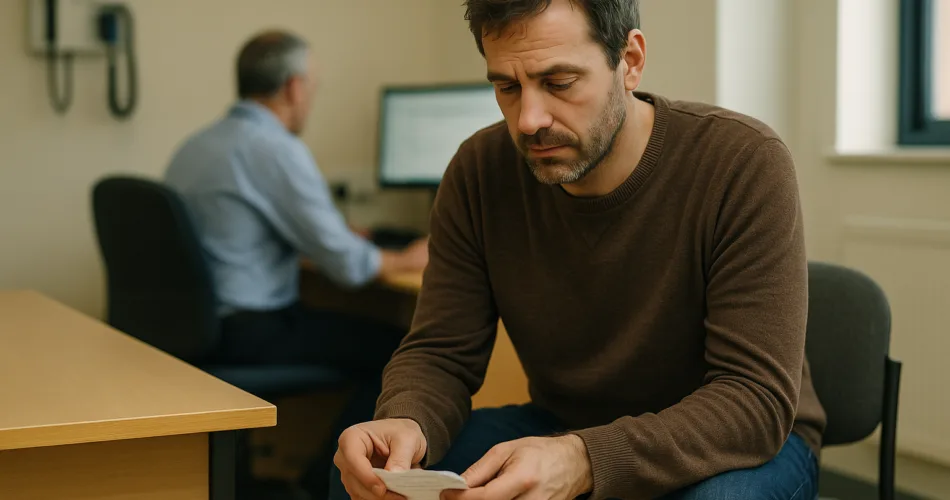
Ever felt like you’re screaming for help but no one hears you? You’re not alone. A huge survey of 5,000 GPs says they’ve never denied a mental health sick note. Yet thousands of patients are still falling through the cracks. It’s the kind of paradox that makes you go, “Wait… what?”
We’re told the system is too strict. That doctors gatekeep mental health support. And then data like this drops—and honestly, it kinda spins your head around. If getting a mental health sick note really is that easy, why do so many people feel abandoned? Why are we still having the same exhausted conversations about burnout, silence, and shame? The more you look, the more you realise the paper itself ain’t the problem. It’s what happens before, around, and long after that scribble on the prescription pad. And that’s where the real story hides.
So let’s get brutally real. When 5,000 GPs swear they’ve never denied a mental health sick note, the uncomfortable truth bubbles up—not as a neat answer, but as a messy, human-sized question: are patients really being heard, or are we just handing them a permission slip to walk into a wall? Let’s pull apart the layers.

The Paper Shield Myth
A mental health sick note can feel like an invisibility cloak. You walk into work, hand it over, and suddenly you’re “protected.” But here’s the thing—paper doesn’t change culture. I once sat with a friend, let’s call her Sarah, who’d been signed off for severe anxiety. Her GP scribbled the note in under five minutes. She had the “evidence.” Yet her manager still scheduled a “catch-up” call every single day, implying she wasn’t really sick. The sick note existed, but psychological safety? Gone.
That’s the gap nobody talks about. A mental health sick note only shields you if everyone around you believes mental illness is real. And spoiler: not everyone does—especially in high-pressure workplaces where “toughing it out” is still worn like a badge. So while GPs might never deny the note, society sure knows how to deny the legitimacy of what’s written on it.
Where’s the Support After the Note?
Think of a mental health sick note like a key. It opens a door labelled “Time Off.” But once you step through, the room is empty. No signposts. No follow-up. In the UK, standard sick leave often means zero proactive mental health outreach unless you’re already attached to a crisis team. You get a few weeks, the note runs out, and then what? It’s like being handed a map with only one road drawn—and that road loops straight back to the place that broke you.
I remember chatting with a colleague who was falling through the cracks fast. He’d been handed three consecutive mental health sick notes. No one called from the surgery. No occupational health referral. His recovery stalled because rest without repair is just a pause button, not a solution. That’s when you realise the GPs’ “never denied” stat isn’t a victory—it’s a red flag that access hasn’t been the bottleneck. The bottleneck is everything that should happen next.