
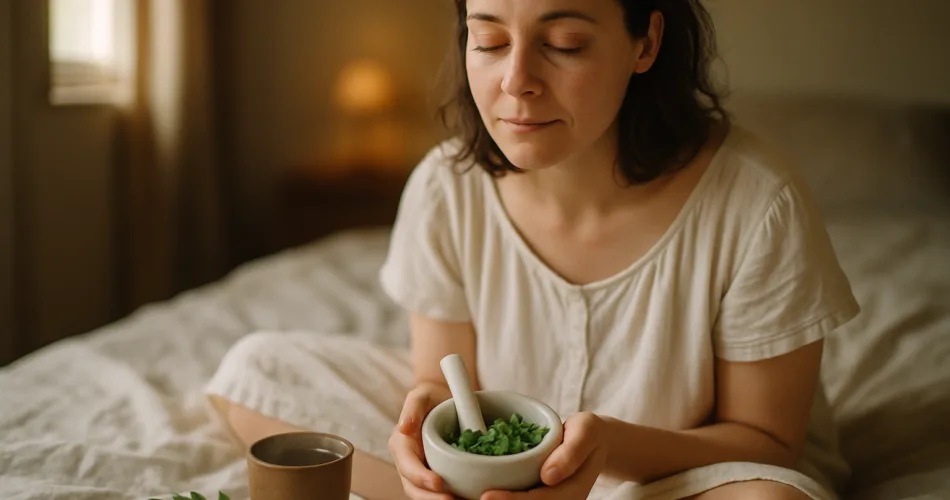
You know that sinking feeling when your brain just won’t shut up? Your to-do list keeps playing on repeat, and sleep feels like a distant dream. Honestly, stress is kinda like that uninvited guest who refuses to leave. But here’s the kicker: the solution might already be sitting in your spice rack. Let’s talk about Indian herbs for stress relief that work while you’re busy dreaming. I’m gonna share three kitchen herbs for sleep that make winding down effortless. Think of them as your secret weapon to reduce stress naturally without any fancy routines.
Picture this: It’s 11 PM. You’re tossing, turning, and your mind is running a marathon. You’ve tried everything—meditation, counting sheep, even that boring podcast. But what if I told you that sipping something warm before bed could flip the switch? That’s where these herbal sleep remedies come in. They’re not magic potions, but they’re darn close. And the best part? You don’t need a trip to the health store. Ayurvedic stress relief is basically hiding in plain sight in your kitchen cabinet.
Let me ask you something: When was the last time you actually felt calm before bed? Like, truly relaxed? Most of us are so wired that sleep feels like a chore. But your grandma knew a thing or two about this. She’d boil some water, toss in a few leaves, and boom—you’d be out like a light. That’s the power of insomnia natural remedies. These herbs don’t just knock you out; they gently nudge your nervous system into chill mode. Think of them like a lullaby for your brain cells.

Herb #1: Tulsi (Holy Basil) – The Stress Buster You Didn’t Know You Had
So let’s kick things off with tulsi. You’ve probably seen it in your garden or at the local temple. But did you know it’s basically nature’s chill pill? Tulsi is a superstar when it comes to calming herbs for sleep. It helps lower cortisol—that nasty stress hormone that keeps you awake at 3 AM. I once had a client, Priya, who was an anxious wreck before her big presentation. She started sipping tulsi tea every night. Within a week, she told me she felt like a new person. No joke.
Here’s the science bit: Tulsi contains compounds called adaptogens. These little guys help your body handle stress better. Think of them like a thermostat for your emotions. When things get too hot (aka stressful), they cool you down. A study even found that regular tulsi consumption can reduce stress symptoms by up to 39%. That’s not just a number—that’s you waking up actually feeling rested.
How to use it for maximum sleep benefits
- Make a simple tea: Steep 5-6 fresh tulsi leaves in hot water for 5 minutes. Add a dash of honey if you like.
- Mix with warm milk: Boil tulsi leaves in milk for a creamier, sleepier version. It’s basically a hug in a mug.
- Inhale the steam: Feeling extra wired? Boil tulsi leaves and breathe in the steam. Your lungs and brain will thank you.

Herb #2: Ashwagandha – The Ancient Warrior Against Insomnia
Now let’s talk about ashwagandha. This one’s a heavyweight in the world of Ayurvedic stress relief. Its name literally means “smell of the horse,” which is kinda funny. But don’t let that put you off. It’s been used for thousands of years to calm the mind and improve sleep quality. Honestly, if you’ve never tried it, you’re missing out.
Here’s the thing: Ashwagandha works by balancing your thyroid and adrenal glands. When those are out of whack, you feel like you’re running on empty. But taking it before bed helps your body switch from “fight or flight” mode to “rest and digest.” Imagine your brain is a noisy party. Ashwagandha kicks everyone out and turns on the soft music. Reduce stress naturally with this root, and you’ll wake up feeling like you actually slept.
I remember reading a study where participants took 600mg of ashwagandha daily. After 8 weeks, they reported a 72% improvement in sleep quality. That’s huge. But here’s the kicker: it’s not a sleeping pill. It doesn’t knock you out cold. It just makes falling asleep feel… natural. Like your body remembers how to do it.
Ways to incorporate ashwagandha
- Powder in warm milk: Mix half a teaspoon of ashwagandha powder in warm milk. Drink it 30 minutes before bed.
- Capsules: If you’re lazy like me, just pop a capsule. Easy peasy.
- Golden latte: Add ashwagandha, turmeric, and cinnamon to warm milk. It’s a flavor party with sleep benefits.

Herb #3: Jatamansi – The Hidden Gem for Deep Sleep
Okay, so this one is a bit less famous than the first two. But trust me, it’s a game-changer. Jatamansi is often called “Indian spikenard,” and it smells like the earth after rain. It’s been used in insomnia natural remedies for ages. What it does is quiet that constant mental chatter. You know how your brain loves to replay awkward moments from 10 years ago? Jatamansi tells it to shut up.
Think of it like this: Stress is like a noisy neighbor. Jatamansi builds a soundproof wall between you and that neighbor. Calming herbs for sleep like this one work on your serotonin levels—the happy chemical. More serotonin means less stress and deeper sleep. I once recommended it to a friend who had chronic jet lag. She started using jatamansi oil on her temples, and she told me it felt like her brain finally took a vacation.
Fun fact: Ancient Ayurvedic texts describe jatamansi as “the herb that brings joy.” And honestly, when you’re sleeping great, everything feels better, right? A 2021 study even found that jatamansi extract can reduce anxiety levels by 35% in just 4 weeks. That’s better than scrolling through your phone for an hour.
How to use jatamansi
- Essential oil: Dab a drop on your pillow or temples before sleep. Inhale deeply.
- Tea