
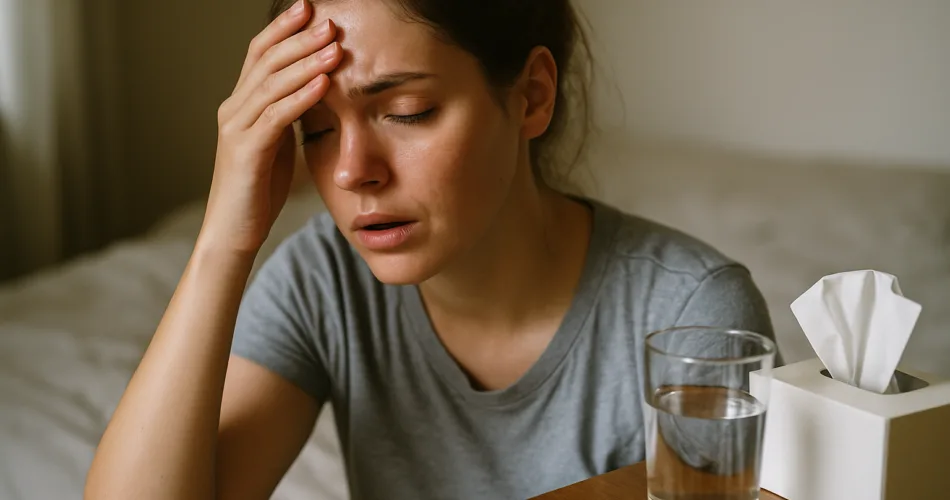
Ever felt that dreaded heat creep up your neck while your head pounds like a bass drum at a concert? That kinda fever you just shrug off, blaming it on a simple flu? Let’s be real, we’ve all been there, reaching for the paracetamol and hoping for the best. But what if that heat is actually a red flag? What if it’s not just a cold, but one of the most dangerous meningitis early warning signs? The fever that hides a killer—one prick could save you, and I’m not talking about a needle for a blood test. I’m talking about a vaccine.
Here’s the kicker: most of us can’t tell the difference between a nasty flu and the onset of bacterial meningitis signs until it’s almost too late. It’s fast, it’s brutal, and it doesn’t care how healthy you think you are. Honestly, I’ve had a friend who spent three days in bed with what she thought was a “bad migraine.” Turns out, her fever causes were the least of her worries—her spinal fluid was fighting a full-blown infection. She was lucky. You don’t wanna gamble with that kind of luck, trust me.
So, how do you know if it’s just a bug or something that can take your life in 24 hours? You need to look past the thermometer. You need to know what your body is *really* screaming at you. And more importantly, you need to know if you’ve already armed yourself with the meningitis vaccine. Let’s dive into the deep end, but don’t worry—I’ll keep it light. We’re gonna unravel this mystery together.
Let’s break this down, shall we? The big question isn’t just “why is my body hot?” It’s “why is my *neck* stiff and why does light hurt my eyes?” You see, meningitis symptoms are sneaky. They mimic the flu, but they have a few specific “tells” that you absolutely cannot ignore. Think of your brain like a high-security vault. Meningitis is the hacker trying to break in through the walls. The inflammation it causes presses against your spinal cord and brain, which triggers alarm bells—but those bells sound a lot like a regular headache at first.
One of the biggest mistakes I see people make? Waiting. They wait for the rash. *Pro tip:* The rash is late. By the time the rash appears (the one that doesn’t fade under a glass), you’re already in the danger zone. The real meningitis prevention starts way before that. It starts with knowing the signs *before* the fever spikes. You need to check for the “tripod sign”—where a child or adult sits with their head arched back, unable to touch their chin to their chest. That’s a huge red flag.
Let’s talk about the “why” for a second. Why does this thing kill so fast? Well, imagine your brain is a delicate sponge. When it gets infected, it swells. Your skull is hard bone. There’s no room to expand. So, pressure builds up, cutting off blood flow. That’s why time is brain. That’s why neck stiffness fever is not just an inconvenience—it’s a ticking clock. I once read a stat that scared the heck out of me: *”Meningitis can kill within 24 hours of symptoms starting, with 1 in 10 cases being fatal.”* That’s not fear-mongering; that’s a reality check from the Meningitis Research Foundation.

So, what exactly are we looking for? Forget the generic “aches and pains” for a minute. I want you to memorize this checklist. It’s not just about the heat; it’s about the *combination*. Here’s the ugly truth about bacterial meningitis signs that separates it from a cold:
- Photophobia: Light feels like tiny needles in your eyes. You wanna hide in a dark room, not just because of a headache, but because the light genuinely hurts.
- Vomiting (Projectile): Not the “I ate too much” kind. The sudden, forceful kind that comes out of nowhere with no nausea.
- Drowsiness: You’re not just tired; you’re confused. It’s hard to wake the person up, and when you do, they’re grumpy and not making sense.
- Cold Hands & Feet: Even with a high fever, their extremities feel like ice cubes. That’s the body redirecting blood to save the organs.
Now, let’s get to the hero of this story: The Vaccine. You might think, “Oh, I had that shot when I was a kid.” But hold on. There are different types! The one you had in middle school might not cover *Meningitis B*, which is a big one for teens and young adults. The meningitis vaccine isn’t a one-and-done deal. It’s a strategy. The MenACWY vaccine covers four types, but MenB is a separate shot. If you’re heading to college, living in a dorm, or just sneezing next to a stranger on the subway, you need to check your records. *RHS studies show that vaccination reduces the risk of meningitis by over 90%, but only if you have the right one.*
Let me paint you a picture. Remember the panic during the meningitis outbreak in college campuses a few years back? It was scary because it spread like wildfire. Think of your dormitory like a petri dish. Sharing a water bottle, kissing, coughing—it’s all it takes. That’s why meningitis prevention is 100% about being proactive, not reactive. You can’t “treat” your way out of it once it hits; you have to block the door before the thief walks in.

But let’s go back to that fever for a second. You’re at home, you have a temp of 102, and you’re kinda freaking out. What do you do? First, do the “glass test.” Press a clear glass against the rash. If the spots fade, it’s likely not meningococcal. If they stay visible? Get to the ER. Now. But remember, not everyone gets a rash. So, look for the meningitis early warning signs I mentioned before. If your kid is complaining that their neck hurts and they can’t touch their chin to their chest, don’t wait for the doctor’s appointment tomorrow. Go to the emergency room *tonight*.
Honestly, I get it. We don’t wanna be the person who overreacts. We don’t wanna waste the doctor’s time. But let me tell you, as someone who has seen the aftermath of a missed diagnosis, the embarrassment of a false alarm is a million times