
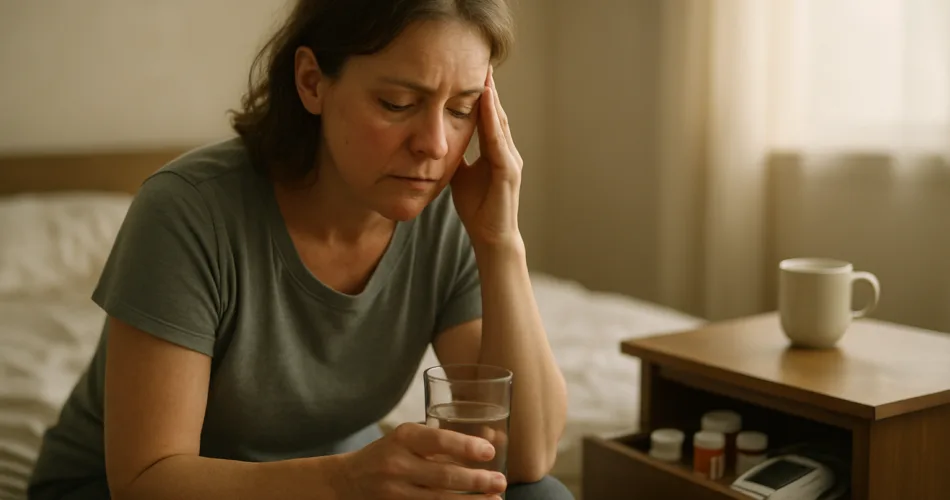
You know that feeling when you hit the 3 PM wall, and your brain just… refuses? It’s not just tiredness. It’s a weird, bone-deep fog. Let’s be real, we all blame it on a bad night’s sleep or a heavy lunch. But what if I told you that your nagging tiredness might not be about sleep at all?
Honestly, this could be way more serious than you think. We’re talking about fatigue causes that aren’t lifestyle-related. Picture your blood as a highway. When traffic flows, you feel great. When there’s a blockage or a missing lane, everything slows down. This is exactly what happens with anemia symptoms. You guessed it—we’re diving deep into the The Silent Blood Crisis Hiding in Your Fatigue.
I remember a client, Sarah, who was training for a marathon. She ate clean, slept eight hours, and still felt like a zombie. She thought it was burnout. Turns out, her iron deficiency was so severe her doctor nearly sent her to the ER. Scary, right? The scary part is that most people walk around with this ticking time bomb daily. They pop caffeine pills and energy drinks, masking the real issue. We need to talk about why this happens and who is most vulnerable. 
Let’s get one thing straight: this isn’t just about feeling sleepy. Blood disorder signs are subtle. They creep up on you like a slow leak in a tire. You don’t notice it until you’re stranded on the highway. Your body is basically screaming for help, but we often misinterpret the cues. We think “I’m just getting older” or “I’ll sleep on the weekend.” But your blood isn’t waiting for your schedule. It needs fuel, and if it doesn’t get it, you’re heading for a crash.
So, why is this a crisis? Look at the stats. Nearly 2 billion people worldwide suffer from some form of anemia. That’s roughly 30% of the global population. But here’s the kicker—many of them don’t even know. They chalk it up to chronic fatigue syndrome or just plain laziness. I mean, honestly, how many times have you told yourself “I just need more coffee?” The result? A silent pandemic of hidden anemia that goes untreated for years. It affects your heart, your brain, and your immune system. It’s not just about being tired; it’s about your organs struggling to function. 
Think of your hemoglobin as the delivery truck for oxygen. Low hemoglobin means you have fewer trucks. So, your heart has to pump harder and faster to get the same amount of oxygen to your muscles. That’s why you get winded walking up stairs. That’s why you feel palpitations. It’s exhausting just sitting still! I once read a study that compared this to running a car engine with dirty oil. Eventually, the engine seizes. Your body is begging for an oil change, but you’re giving it more gas (sugar and caffeine) instead.
Now, let’s talk about who’s walking around with this ticking time bomb. First up: women of childbearing age. Why? Menstruation. Losing blood every month depletes iron stores faster than you can replace them. If you’re someone who skips red meat or follows a plant-based diet, you’re at an even higher risk. But it’s not just ladies. You guys aren’t safe either. Athletes, especially endurance runners, suffer from “foot-strike hemolysis.” Basically, running can smash your red blood cells. Add that to heavy sweating, and you have a recipe for disaster. Also, anyone over 65—your bone marrow doesn’t produce cells as efficiently as it used to. And let’s not forget those with gut issues like Celiac or Crohn’s. If you can’t absorb iron, you can’t use it. Period.
Here is where it gets tricky. The hidden symptoms are the ones we ignore. For example, craving ice. Yes, ice. It’s called Pagophagia. Craving dirt or clay? That’s a big red flag too. Weird, right? Also, look at your fingernails. Do they look brittle? Do they have ridges? Or maybe they curve upward like a spoon? That’s a classic sign. And what about your tongue? If it’s sore or swollen, that’s your body talking. But the sneakiest symptom? Restless legs. You can’t sleep because your legs feel like they have electricity running through them. It’s maddening. I had a friend who swore she had a neurological issue. Nope, it was just her anemia symptoms acting up.
So, what are you actually supposed to do? First, don’t panic. But do get a blood test. Ask for a Full Blood Count (FBC) and specifically check your Ferritin levels. Ferritin is your stored iron. Sometimes your hemoglobin looks normal, but your ferritin is in the basement. That means you’re cruising on empty. Doctors often miss this because they only check hemoglobin. You gotta advocate for yourself. Say, “Hey, check my ferritin too.” Trust me on this.
If you *do* have low iron, it’s not just about eating spinach. Spinach has iron, yeah, but it’s non-heme iron, which is harder to absorb. You need Vitamin C to help that out. Or, go for heme iron—meat, fish, poultry. But the real game-changer? Cooking in a cast iron pan. Sounds old-school, but it legitimately increases the iron content of your food by up to 16%! That’s a hack my grandma knew that we forgot.
Let’s break down a quick action plan, shall we? Here’s what you can do starting today:
- Get tested: Don’t assume. Verify your low hemoglobin levels.
- Pair your foods: Eat iron-rich foods with citrus. Orange juice and steak? Perfect combo.
- Space out your coffee: Tannins in tea and coffee block iron absorption. Wait at least an hour after eating.
- Check your meds: Some antacids and calcium supplements interfere with iron uptake.
- Listen to your cravings: If you’re chewing ice, stop and call your doctor. It’s a sign.
Now, I know a lot of you are gonna think, “Well, I’m just tired because I have kids or I work too hard.” And sure, that’s valid. But how do you know? Look at the statistics: *A study published in the Lancet found that iron deficiency costs the global economy billions in lost productivity every year.* It’s not just a “women’s issue” or an “old person’s issue.” It’s a human issue. We are walking around operating at 40% capacity. Imagine the things you could do if you had 100% energy. Seriously. Imagine waking up and not needing that alarm clock. Imagine running up the stairs without gasping.