


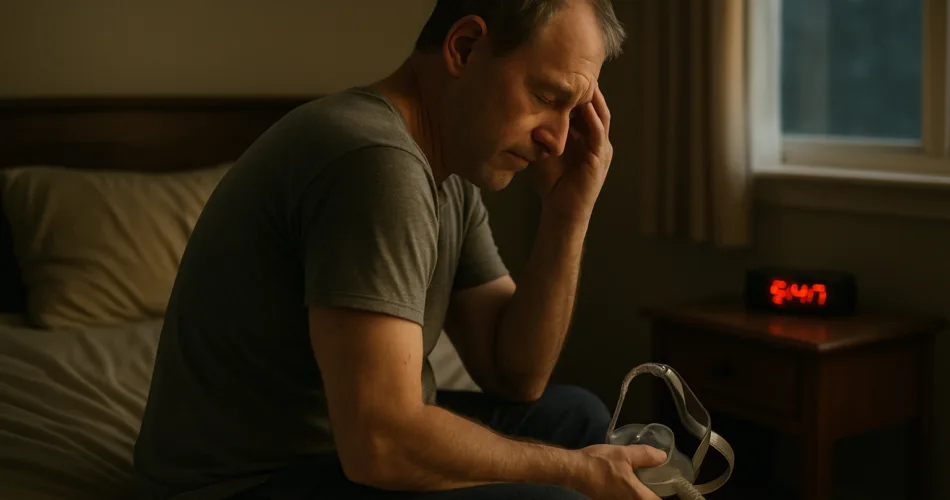
Ever woken up feeling like you just ran a marathon in your sleep? Your throat is raw, your head is pounding, and your partner is giving you that *look* again. Yeah, the one that says “you were snoring like a chainsaw again.” But here’s the scary part—that nightly noise might be more than just annoying. Those sleep apnea symptoms could be quietly messing with your ticker. Let’s be real, we often brush off snoring as a harmless quirk, but *snoring silently destroying your heart* isn’t just clickbait. It’s a genuine concern that deserves your attention.
Picture this: you’re lying in bed, breathing stops for a few seconds, your brain panics, and your heart rate spikes. This isn’t a horror movie, though. It’s a nightly reality for millions. The connection between snoring heart risk is backed by serious science, yet most of us ignore the signs until it’s too late. I once had a friend, let’s call him Mike, who thought his exhaustion was just “dad life.” Turns out, his loud snores were a red flag for something far worse. He had weight-related sleep apnea and didn’t even know it. And you might be in the same boat, missing the clues your body is throwing at you.
The problem isn’t just the noise. It’s the silent strain on your cardiovascular system. Every pause in breathing drops your oxygen levels, which forces your heart to work overtime. Think of it like your heart is doing deadlifts all night without a gym membership. The kicker? You don’t have to be obese to suffer. But, there are six sneaky weight clues you’ve probably missed. These aren’t just about the number on the scale—they’re about where the fat is hiding and how it’s affecting your airway. So, grab a coffee, and let’s dive into why your sleep might be your heart’s worst enemy.

Honestly, most people think sleep apnea is just “loud snoring.” But it’s way deeper. It’s obstructive sleep apnea that usually gets the spotlight, where your throat muscles relax too much and block your airway. The result? You literally stop breathing for 10 seconds or more, sometimes hundreds of times a night. Your brain wakes you up just enough to gasp, but you never reach deep sleep. That’s why you’re exhausted. But here’s the twist: the fat around your neck and belly acts like a vise. It compresses your airway when you lie down. The more weight you carry, the tighter the squeeze. This is why obstructive sleep apnea signs often worsen with even a small amount of weight gain.
Now, let’s talk about the heart. Did you know that untreated sleep apnea skyrockets your risk of high blood pressure, stroke, and irregular heartbeats? One study showed that people with severe sleep apnea have a 2-3 times higher risk of dying from heart disease. That’s not just a statistic; that’s a red alert. The oxygen dips trigger your body to release stress hormones, like adrenaline. These hormones raise your heart rate and blood pressure. Over time, this constant “fight or flight” mode wears down your cardiac health. It’s like driving your car at 100 mph in first gear—eventually, the engine blows.
So, what are the missed weight clues? It’s not always about looking “fat.” It’s about the invisible fat deposits. Let’s break it down. These are the signs that you might have sleep apnea warning signs linked to weight, even if you’re “not that big.”
1. The “Fatter Than Your Jeans” Neck Size
Grab a measuring tape, seriously. For men, a neck circumference of 17 inches or more is a giant warning flag. For women, it’s 16 inches. Why? Because a thicker neck means more soft tissue to collapse and block your breathing. It’s not just about having a “sturdy” neck. If your collars feel tighter than they used to, pay attention. This is a classic sign that unexplained weight gain apnea is creeping in.
2. The “Traffic Jam” Waistline Ratio
Your waist-to-hip ratio matters way more than your BMI. Fat around your midsection, or visceral fat, is dangerous. It doesn’t just sit there; it releases inflammatory chemicals that affect your respiratory system. If your waist is close to your hip size, you’re carrying dangerous weight. This abdominal fat pushes up on your diaphragm, making it harder to breathe deeply, especially when sleeping. It’s a hidden clue that your snoring isn’t just a habit—it’s mechanical.
3. The “I Can’t Lose Weight” Plateu
Ever feel like you’re eating salad and still gaining weight? Welcome to the vicious cycle. Sleep deprivation caused by apnea messes with your hunger hormones. Ghrelin (the “I’m hungry” hormone) goes up, and Leptin (the “I’m full” hormone) drops. So, you crave carbs and sugary snacks. You eat more, gain weight, which worsens your snoring and heart disease risk. It’s a loop. But, when you treat the apnea, weight loss becomes easier. It’s like your body finally gets the memo to stop storing fat.
4. The “Never Enough Sleep” Rage
If you sleep 8 hours but feel like you’ve been awake for 3 days, that’s a clue. You might think you’re just “not a morning person.” But chronic fatigue is a direct result of fragmented sleep. Your body starves for restorative deep sleep. This exhaustion also leads to decreased physical activity. You skip the gym because you’re tired. Less movement equals more weight gain. It’s a sneaky, silent killer on your energy and your scale.
5. The “Pillow Prop” Dilemma
Do you find yourself needing 2 or 3 pillows to prop your head up to breathe comfortably? That’s your body trying to compensate. Elevating your head reduces the gravitational pull on your throat, keeping the airway more open. If you can’t sleep flat without choking or gasping, it’s a huge sleep apnea symptoms clue. This isn’t just a preference; it’s a survival mechanism. Your body knows it breathes better at an angle.
6. The “Seatbelt Test” Breathe Hold
Here’s a weird one: do you take a deep breath, then instantly hold it? Or do you feel like you “forget” to breathe while concentrating? This is called “air hunger.” It’s the same mechanism at play during sleep. The brain’s signal to breathe gets blunted by the pressure on your throat. This conscious feeling of breathlessness during the day is a microcosm of what happens at night. It’s your system telling you that your breathing pattern is off.
Let’s be honest, reading this might feel like a lot. But knowledge is power, right? I remember feeling Mike’s frustration when he told me he tried keto, paleo, and everything in between. Nothing worked until he got a sleep study done. Once he started using CPAP therapy, the fog lifted. He lost 15 pounds in a month without changing his diet drastically. Why? Because his body finally had the energy to exercise and the hormones to tell his brain he was full. The sleep apnea heart risk was still there, but he